The Science Behind Yomassage®: Why Touch, Stretch, and Breath Work Better Together
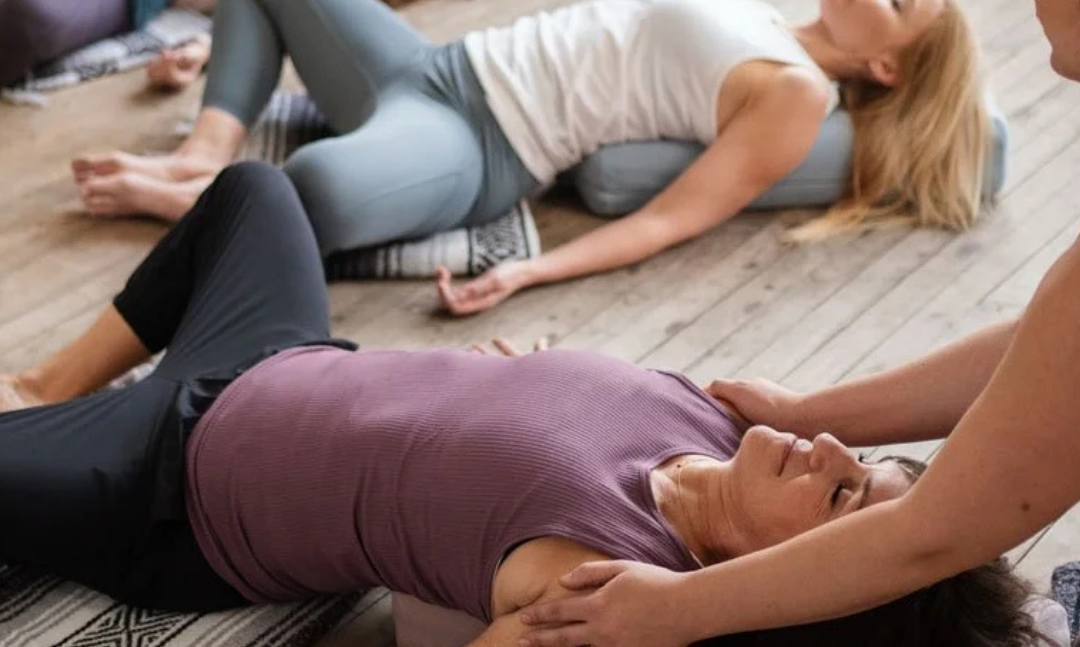
Why does Yomassage® feel so different?
I'm bringing a new class to the studio called Yomassage®, and before I get into the details of what it looks like, I want to explain why it works. It combines touch, stretch, and breath in a way that's backed by science, and understanding the why makes the practice mean a lot more than just "it sounds relaxing."
This isn't a pitch for the class. It's a look at the mechanics of what happens in your body when touch, stretch, and breath all come together at once.
It starts with your nervous system
Your nervous system has two main branches: the sympathetic nervous system, which is your fight or flight response, and the parasympathetic nervous system, often called rest and digest. The sympathetic system is built for short bursts, like jumping out of the way of a car. It floods your body with stress hormones, speeds up your heart rate, and gets you ready to react.
The problem is that modern life keeps a lot of us stuck in that sympathetic nervous system far more than our bodies were built for. Constant notifications, deadlines, traffic, the mental load of just living in the world right now, it all adds up, and your body can't always tell the difference between a real threat and a perceived one.
The parasympathetic nervous system is the opposite. It's the state where your body slows down, digests, repairs, and restores. The effects of sympathetic activation kick in fast and take a while to wear off, while parasympathetic effects take a bit longer to kick in but fade almost as soon as they start. That's a big reason why it's so important to have practices that intentionally shift you toward parasympathetic activation instead of waiting for it to happen on its own.
That shift, from sympathetic to parasympathetic, is the entire goal of a Yomassage® class. Everything about the format, the touch, the stretch, and the breathwork, exists to help your body find that off switch.
The power of touch
Touch is one of the most basic forms of communication we have. It's the first sense to develop in humans, and there's a well documented connection between the amount of safe, caring touch someone receives and their overall wellbeing.
Research on therapeutic touch has found that light to medium pressure massage can lower cortisol, which is your primary stress hormone, and raise oxytocin, the hormone associated with trust, bonding, and feeling safe. That's part of why Yomassage® leans toward a lighter touch than what you might picture with a deep tissue massage. Deep tissue work isn't bad, and for a lot of people it's truly calming, but for the goals of this class, I lean toward light to moderate, firm pressure instead. Done slowly and with a warm, full hand, that pressure sends a clear signal: you're safe, you can let go.
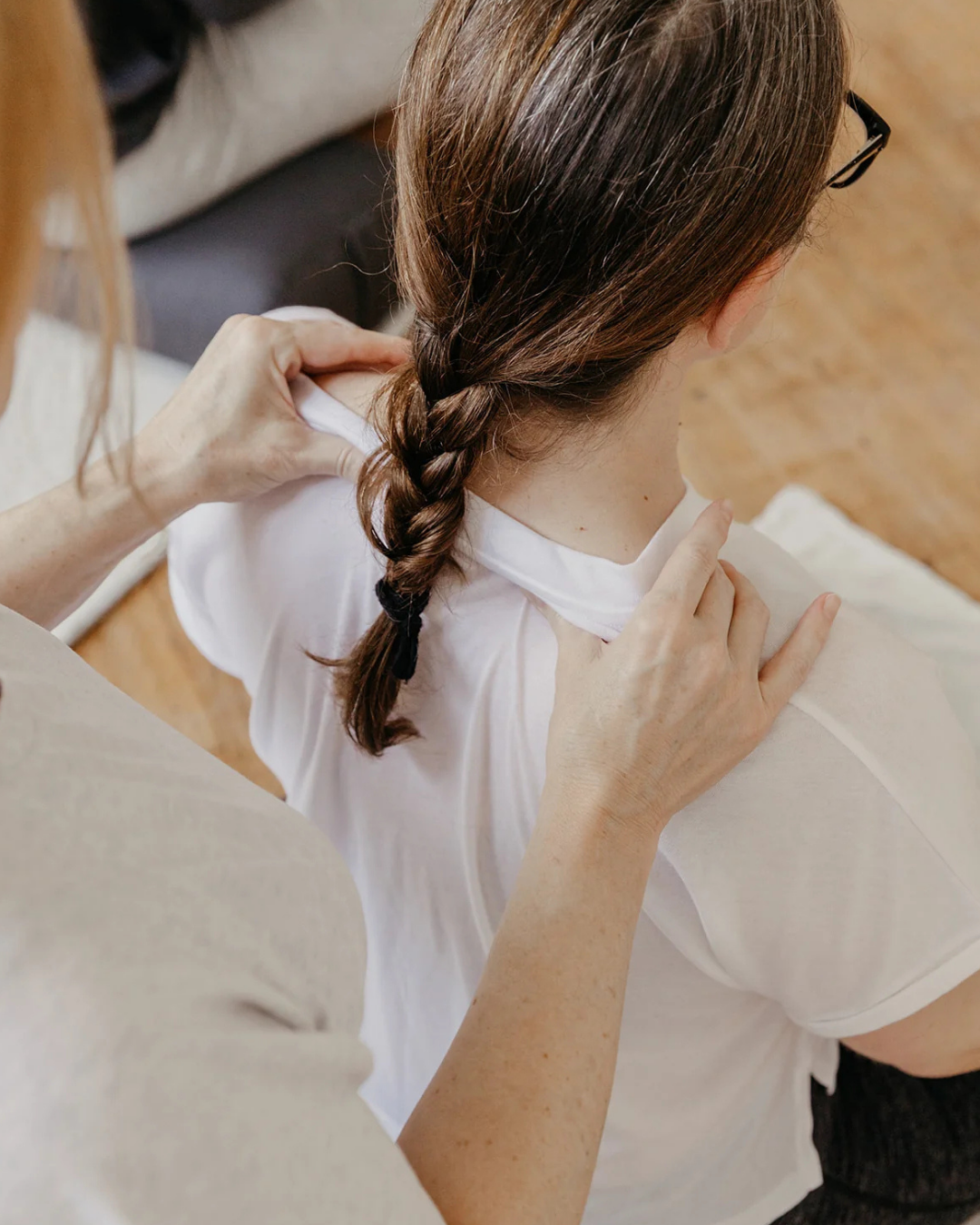
There's also something worth naming here. A lot of us live in what researchers call a touch deprived society. We spend more time interacting with screens than we do connecting with each other in person, and there's a real cost to that. Making therapeutic touch more accessible and more regular, instead of something rare, is a meaningful part of what this practice is trying to do.
The power of stretch
The positions used in Yomassage® are inspired by restorative yoga, but it's a very different kind of stretching than what you'd do in an active vinyasa or power yoga class. There's no effort involved. You're fully supported by props, bolsters, blankets, and blocks, so your muscles never have to engage to hold the position. Your body just gets to soften into it.
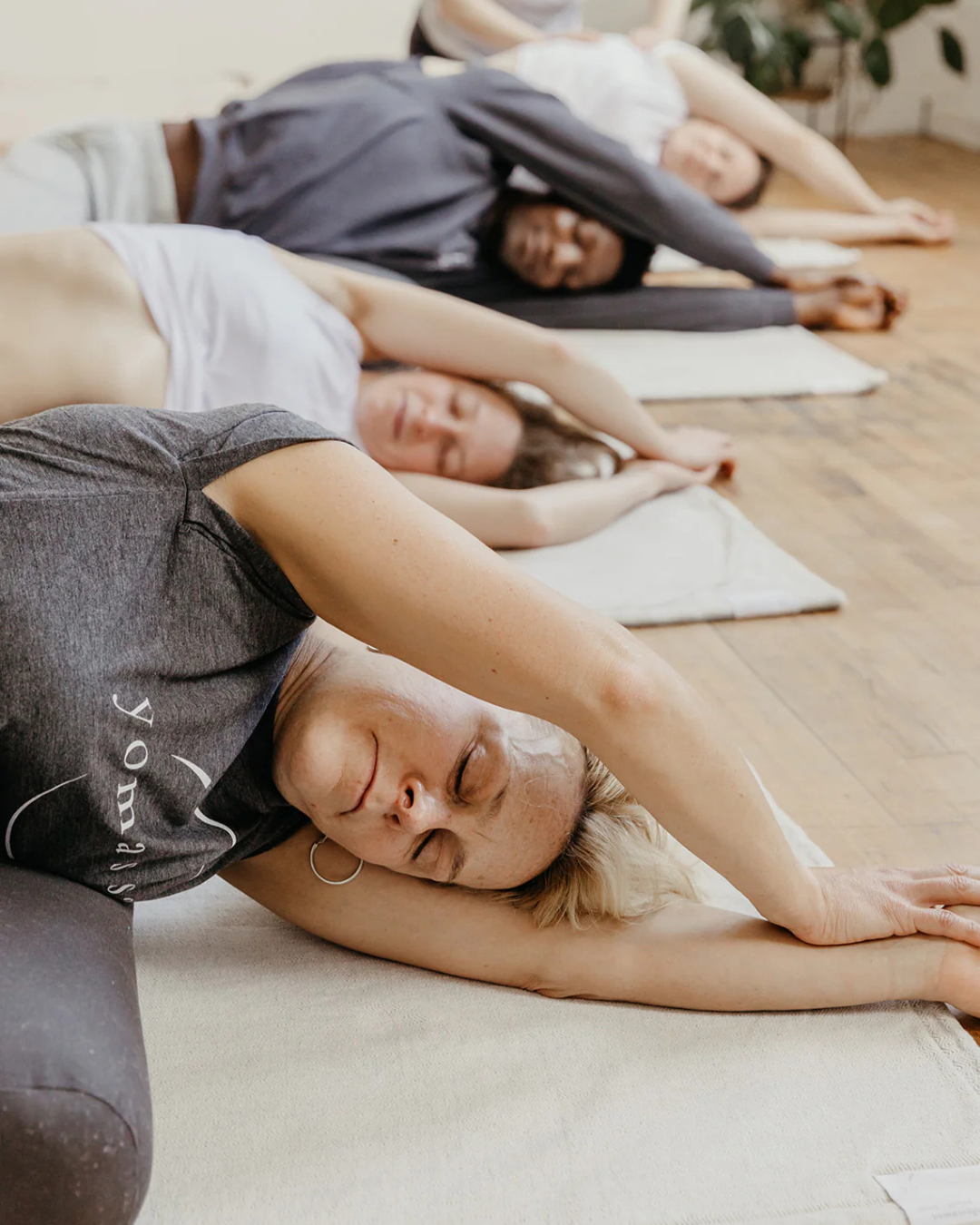
That distinction matters. A restorative stretch is passive and can be held for many minutes at a time without strain, which allows it to reach deeper into the connective tissue and fascia than a quick daily stretch ever could. Fascia is the connective tissue that runs through your entire body, and it responds to slow, sustained pressure in a way it doesn't respond to quick movement. Holding a gentle stretch for several minutes, the way I do in class, gives that tissue time to lengthen and release, rather than just being pulled on briefly and springing right back.
This is also why the stretch should never hurt. If a position feels intense or like you couldn't hold it for more than a minute or two, it's too deep, and the fix is more support, not more effort.
The power of breath
Breath is the only part of your autonomic nervous system you can consciously control. Your heart rate, digestion, and blood pressure all happen automatically, but breathing is something you can choose to slow down and direct, and doing so has a direct effect on the rest of the system.
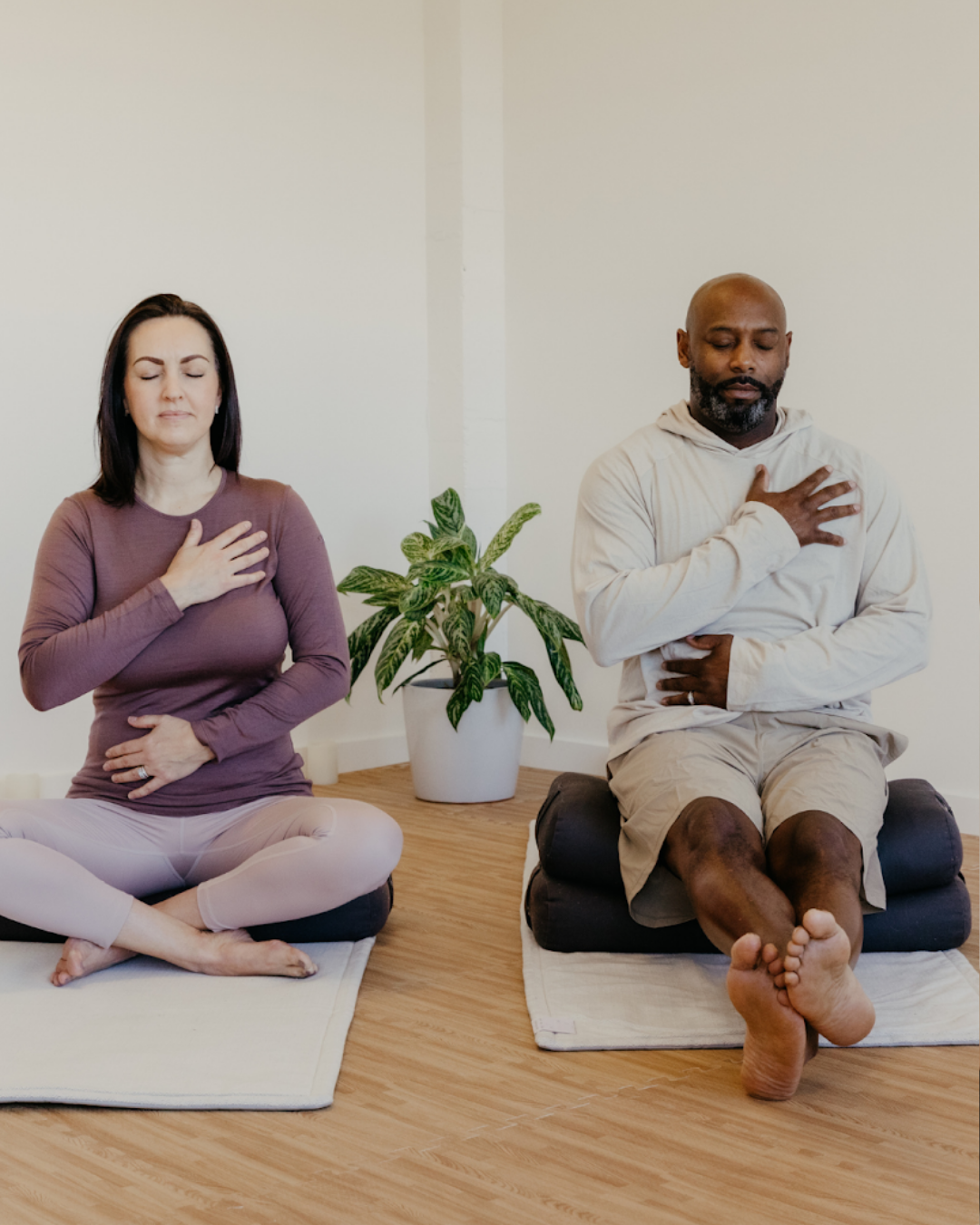
A big piece of that connection runs through the vagus nerve, which is deeply involved in activating the parasympathetic, rest and digest side of your nervous system. Slower, deeper breathing helps calm that nerve and nudges your whole body toward relaxation. This is why every class opens with a few minutes of breathwork before any touch or stretching begins. It's not a warm-up formality, it's setting the stage, helping your body start shifting into the state where the stretch and touch that follow can have their full effect.
Why combining all three changes everything
Touch, stretch, and breath each help calm the nervous system on their own. There's research behind each one individually. But Yomassage® layers all three together, at the same time, for an extended period, in a supported group setting, and that combination seems to create something bigger than any single element.
Think about it this way. Breathwork helps calm your nervous system through the vagus nerve. Restorative stretch gives your fascia and muscles the time they need to release, without effort. And therapeutic touch adds the oxytocin and safety signal on top of that. None of these are working against each other. They're all nudging your body in the exact same direction at the exact same time, which is a big part of why a Yomassage® session can feel so much more restorative than a massage alone or a yoga class alone.
What a class looks like
It's a small group, limited to 5 participants so everyone gets plenty of individualized attention. When you arrive, the room is set up ahead of time, props ready, lighting low, music playing, maybe some calming aromatherapy in the air, so all you have to do is find your mat and settle in.
I start with a few minutes of guided breathwork to help you shift out of the day you just had. From there, you'll move into a series of restorative yoga poses, each supported by bolsters and blankets and held for several minutes, while I come around to each person and offer massage. I close with an extended shavasana, a longer stretch of stillness at the end, and when it's over, you just get up and go. There's no cleanup on your end, I take care of all of that for you.
Sessions run about 90 minutes. Wear something comfy and don't worry about bringing anything, I provide all the mats, bolsters, and blankets.
Come see it for yourself
If this kind of deeper dive into the why makes you even more curious about the what, I'd love to have you in class.
References
On the nervous system:
- Merck Manuals, "Overview of the Autonomic Nervous System" (2018): merckmanuals.com
- Rick Hanson, PhD, on activating the parasympathetic nervous system (2007): rickhanson.net
On touch:
- Maria Konnikova, "The Power of Touch," The New Yorker (2015): newyorker.com
- Psychology Today, "Why We All Need to Touch and Be Touched" (2013): psychologytoday.com
On stretch and fascia:
- Harvard Health, "The Importance of Stretching" (2013): health.harvard.edu
- Anatomy Trains, on fascia: anatomytrains.com
On breath:
- Harvard Health, "Learning Diaphragmatic Breathing": health.harvard.edu
- Harvard Gazette, "A Wandering Mind Is an Unhappy Mind" (2011): news.harvard.edu